
PlanQ
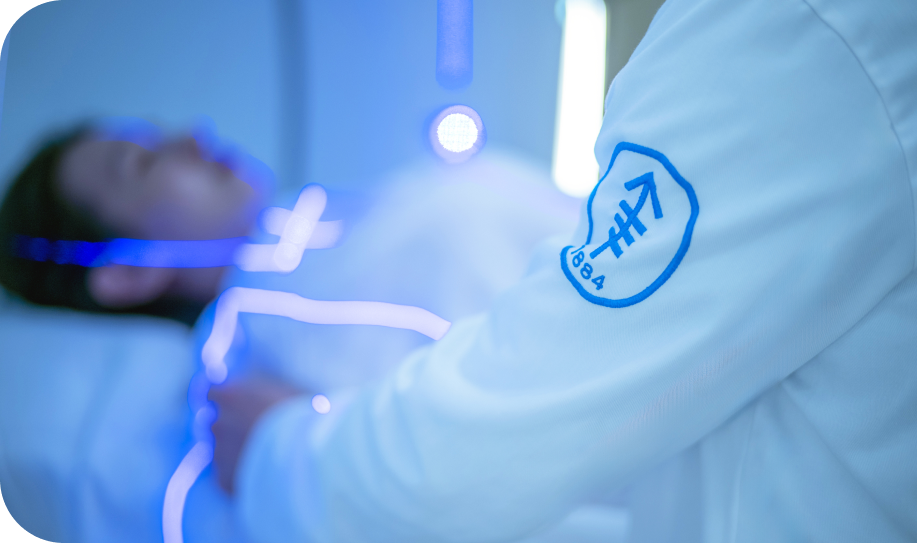
Radiation therapy workflows are complex. Treating a single patient spans six phases, involves six or more clinical roles, and relies on fragmented systems that fail to support workflows.
Even with dedicated Treatment Planning Coordinators managing handoffs, the average 1.5-week journey from first patient encounter to first fraction leaves significant room for delays and errors-an especially critical risk at Memorial Sloan Kettering Cancer Center, where more than 300 patients are treated with radiotherapy each week.
Contributions
- Ethnographic UX Research
- Stakeholder Alignment Workshopping
- User archetypes
- Service Blueprinting
- Design Strategy, Capability Modeling, Roadmapping
- Concept Design & Resonance Testing
- Usability Testing
- Responsive UX/UI Design
- AI-assisted Prototyping & Coding
- Behavioral Data Event Taxonomy, Tagging, & Analysis
Principal Product Designer, User Researcher, and UX Strategist
Challenges
Radiotherapy precision demands equally precise technology-but privately owned healthcare software fall short, leading to workflows riddled with problems:

14 disconnected tools - radiotherapy required work across a highly-fragmented ecosystem, including Epic, ARIA, Eclipse, MIM, and PACS
Patient safety risks - no automated data curation, patient summaries, or quality assurance checks led to avoidable patient safety risks
Slow turnaround - Poor resource and status management across teams meant slower times-to-treatment
Missed cost-savings - Manual, labor-intensive processes, without the ability to monitor resources and mitigate slowdowns meant money lost
Usability friction - the legacy suite of tools available to teams generates excessive clicks, constant context-switching, toggling between non-responsive interfaces, and data clutter
"The problem [with our current tools] is the labor...the manual labor required to physically find, reconcile, make sense of all the data, type it all up... on every patient. And a lot of what we use is not viewable or editable by multiple people at the same time."
Approach
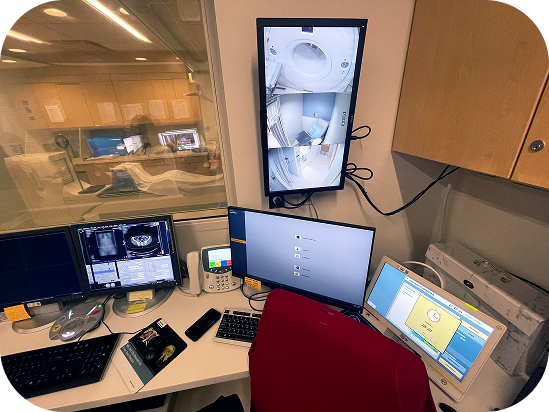
In-Hospital Observations
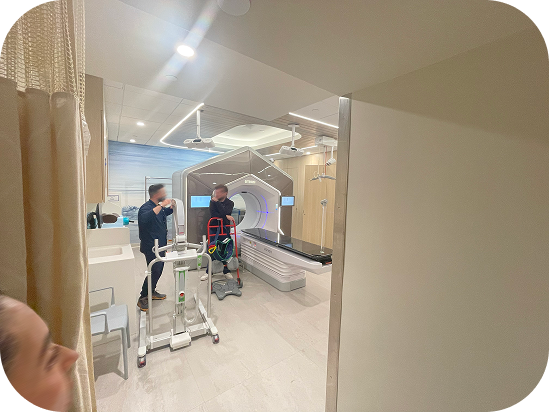
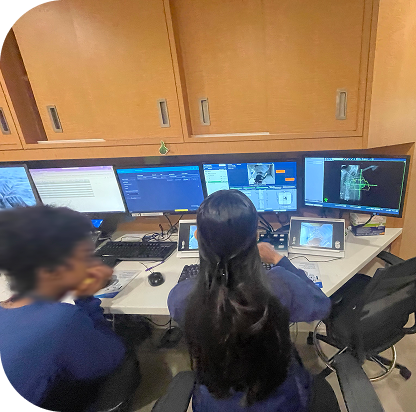
To deeply understand the clinical environment, we conducted immersive ethnographic research across three hospital sites, shadowing key roles to document their day-to-day tasks and pain points. This on-the-ground observation grounded our strategy in the lived realities, how things escalate quickly, and the personal workarounds being done to overcome poor technology.
External Beam Radiotherapy Workflow Mapping
Visualizing the workflow enables us to pinpoint critical bottlenecks, usability frictions, and strategic opportunities for PlanQ intervention. This foundational mapping was repeatedly used as a springboard prior to new process onboarding, new user observations, and mapped back to our roadmap to show how incremental solutions will bridge gaps and improved the lived experience.